1. Businessperson
2. Chairperson
3. Coed? How is this sexist? It is a term for both sexes
4. congress representative
5. crewperson
6. Firefighter
7. gentleperson
8. wife
9. mailer deliverer
10. Couple
11. Humanpower
12. per person
13. police officer
14. repair technician
15. sales associate
16. boat worker
17. flight attendant
18. sanitation engineer
1. Doctors should explain medical problems to their patients in layman's terms.
2. The lawyer, Elaine Murphy, wore a stunning chanel suit and won her client's case.
3. The author and poet, Michelle Newman, will sign copies of her new book.
4. Because the nurse has a great sense of humor, the pediatrician's patients actually enjoy their visits.
5. Dedicated artists often neglect their spouse and children.
6. An editor is responsible for meeting their deadlines.
Thursday, December 4, 2008

Wednesday, November 26, 2008
Advertising
 Let's start with a classic. This ad came out in a time when advetising was getting to be way over the top gaudy illustrations and colors all design to shock and wow. The Volkswagon ads rely on the design of the vehicle only. The layout is very straight forward and simple. Exactly what the volkswagon was to that generation. Designers to this day use this form to set apart well designed items (i.e the eames chair.)
 This ad works very well. It uses the same simplicity as the volkswagon ad but it takes it to another level. The simple graphic shapes, legs, and a hand, a somewhat boring by themselves. When combined in this way they create a very visually powerful poster. It is not shocking but it moves you to want to help.
 The last ad is meant to shock and scare the viewer. It was created for a French aids awareness campaign. The concept was to make people thin about who they are sleeping with. I think that it works extremely well. All three posters get their point across with little or no words. This is key to a good visual piece.
 This is a particularly horrible ad that I found on the side of a web page. It is trying to sell anti wrinkle cream and it's not working very well. Before and after pictures don't work, our photoshop culture doesn't buy it anymore. Second the two images side by side don't create a nice picture when they are put together. It looks like a hideous monster. The text and image do not go together whatsoever and the product at the bottom seems slapped on. It's all bad.
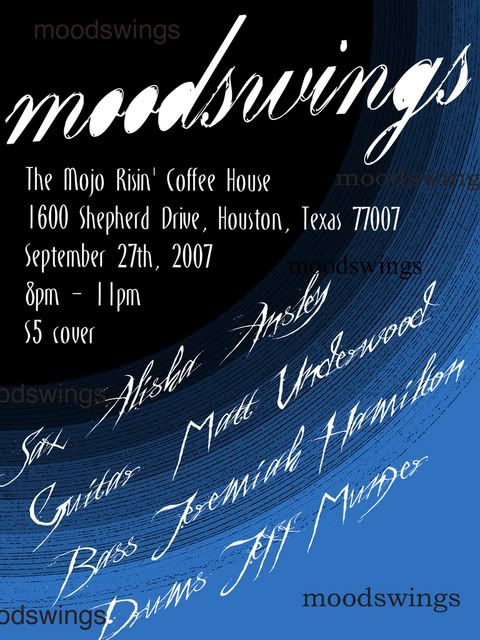 This has an arbitrary blue background and 4 different typefaces. A typographic no-no unless done correctly. I don't know what this is for unless I read the text and its in a bad font that is almost impossible to read. I can barely even look at this. Unfortunately the bad advertising is so much easier to find. You have to dig for the good stuff.
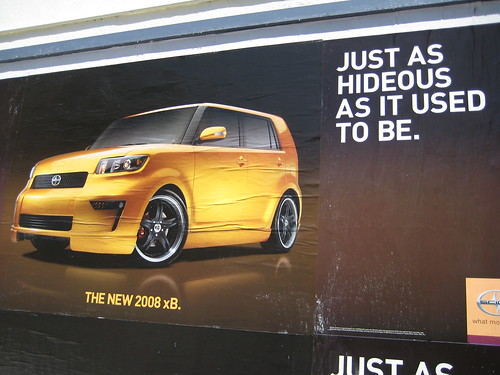 I can't even believe that they got away with this. I don't think there is a CEO on the planet that would pay thousands of dollars to create a billboard saying how ugly their product is. The rest of the ad is fine, I just question why it was made at all.
Thursday, November 6, 2008
1. my sons in law's homes
2. Arkansas' rivers
3. Jim and Joan's house
4. the PhD's research
5. McGraw-Hill inc's Advertising
6. Fred the electrician's estimate
7. anyone else's idea
8. witnesses' depositions
9. The airport's upper level
10. one of my friend's daughter.
1. The tree surgeon could not save the white spruce's limb.
2. The new software package's user manual was so confusing that most people returned it.
3. Windows' intuitive commands make it easier to move from one application to the next.
4. I will be in Hawaii on Mother's day, in New Mexico on April Fool's day, and in California on Veteran's day.
5. Grover Cleveland was the people's choice.
6. Each participant filled out the Reader's comment form.
7. Now that he has his bachelor's degree, he plans to get his master's, and possibly his doctorate.
8. The national Secretaries' Conference will be held in Houston this year.
9. For appearance sake, the feuding vice presidents kept their differences to themselves during the monthly staff meeting.
10. My brother in law's idea was to have the family reunion at the spa.
11. We have been invited to the Roth's holiday party.
12. The telephone company president's idea was to offer discount rates to seniors.
2. Arkansas' rivers
3. Jim and Joan's house
4. the PhD's research
5. McGraw-Hill inc's Advertising
6. Fred the electrician's estimate
7. anyone else's idea
8. witnesses' depositions
9. The airport's upper level
10. one of my friend's daughter.
1. The tree surgeon could not save the white spruce's limb.
2. The new software package's user manual was so confusing that most people returned it.
3. Windows' intuitive commands make it easier to move from one application to the next.
4. I will be in Hawaii on Mother's day, in New Mexico on April Fool's day, and in California on Veteran's day.
5. Grover Cleveland was the people's choice.
6. Each participant filled out the Reader's comment form.
7. Now that he has his bachelor's degree, he plans to get his master's, and possibly his doctorate.
8. The national Secretaries' Conference will be held in Houston this year.
9. For appearance sake, the feuding vice presidents kept their differences to themselves during the monthly staff meeting.
10. My brother in law's idea was to have the family reunion at the spa.
11. We have been invited to the Roth's holiday party.
12. The telephone company president's idea was to offer discount rates to seniors.
Thursday, October 23, 2008
Integrating Sources into a paper
1.1 Differences between primary and secondary sources
1.2 Acknowledging your sources
1.3 Careful citing suggests to your reader that you are trustworthy
1.4 No one knows how to cite correctly so just ask your instructor what they like
2.1 Use sources as concisely as possible, summarize
2.2 Never leave you reader in doubt when sing a source
2.3 Always make your sources clear to your argument
2.4 Underline or italicize book titles
2.5 Quote only what you need or what is striking
2.6 construct your sentence so that the quote fits neatly
2.7 Announce a quote with the words preceding it
2.8 Chose your announcing verb carefully
2.9 Don’t automatically put a comma before a quotation
2.10 Put a period or comma at the end of a quotation inside the close-quotation mark
2.11 Use a slash (/) to indicate a line-break in a quoted passage of poetry
2.12 Punctuate the end of a quotation embedded in your sentence with whatever punctuation your sentence requires
2.13 Otherwise, quote verbatim
2.14 Indent blocks
2.15 Indent all lines 10 spaces from the left of the margin (this goes against all rules of typography and I disagree whole heartedly with it)
2.16 Don’t put an indented block in quotation marks
2.17 Tell your readers in advance who is about to speak and what to be listening for
2.18 Construct your lead-in sentence so that it ends with a colon
2.19 Follow up a block quotation with commentary that reflects on it and makes clear why you needed to quote it
2.20 When using an in-text parenthetic citation, put your citation of a block quotation outside the period at the end of the last sentence quoted.
2.21 Use discursive notes to state something that is not directly related
3.1 Cite only whenever you use factual information or data you found in a source, whenever you quote verbatim, Whenever you summarize, paraphrase, or otherwise use ideas, opinions, interpretations, or conclusions arrived at by another person, whenever you make use of a source passage’s distinctive structure, organizing strategy, or method, whenever you mention in passing some aspect of another person’s work
3.2 Don't Cite when the source and page-location of the relevant passage are obvious, When dealing with “common knowledge,” When you use phrases that have become part of everyday speech, and when you draw on ideas or phrases that arose in conversation
3.3 Methods of citing; sequential notes, in text citing, coding.
3.4 Acknowledging uncited sources.
4.1 Misuse of sources.
4.2 Don't plagiarize
4.3 Plagiarism is uncited information or data from a source and uncited ideas, verbatim is uncited, uncited structure or organizing strategy
4.4 Misrepresenting Evidence
4.5 Improper collaboration
4.6 Dual or overlapping submission
4.7 Abetting plagiarism
4.8 Be careful to cite online sources as well
4.9 You will be expelled
4.10 To avoid Plagiarism don't procrastinate, don't use secondary sources, take notes actively, don't plagerize.
1.2 Acknowledging your sources
1.3 Careful citing suggests to your reader that you are trustworthy
1.4 No one knows how to cite correctly so just ask your instructor what they like
2.1 Use sources as concisely as possible, summarize
2.2 Never leave you reader in doubt when sing a source
2.3 Always make your sources clear to your argument
2.4 Underline or italicize book titles
2.5 Quote only what you need or what is striking
2.6 construct your sentence so that the quote fits neatly
2.7 Announce a quote with the words preceding it
2.8 Chose your announcing verb carefully
2.9 Don’t automatically put a comma before a quotation
2.10 Put a period or comma at the end of a quotation inside the close-quotation mark
2.11 Use a slash (/) to indicate a line-break in a quoted passage of poetry
2.12 Punctuate the end of a quotation embedded in your sentence with whatever punctuation your sentence requires
2.13 Otherwise, quote verbatim
2.14 Indent blocks
2.15 Indent all lines 10 spaces from the left of the margin (this goes against all rules of typography and I disagree whole heartedly with it)
2.16 Don’t put an indented block in quotation marks
2.17 Tell your readers in advance who is about to speak and what to be listening for
2.18 Construct your lead-in sentence so that it ends with a colon
2.19 Follow up a block quotation with commentary that reflects on it and makes clear why you needed to quote it
2.20 When using an in-text parenthetic citation, put your citation of a block quotation outside the period at the end of the last sentence quoted.
2.21 Use discursive notes to state something that is not directly related
3.1 Cite only whenever you use factual information or data you found in a source, whenever you quote verbatim, Whenever you summarize, paraphrase, or otherwise use ideas, opinions, interpretations, or conclusions arrived at by another person, whenever you make use of a source passage’s distinctive structure, organizing strategy, or method, whenever you mention in passing some aspect of another person’s work
3.2 Don't Cite when the source and page-location of the relevant passage are obvious, When dealing with “common knowledge,” When you use phrases that have become part of everyday speech, and when you draw on ideas or phrases that arose in conversation
3.3 Methods of citing; sequential notes, in text citing, coding.
3.4 Acknowledging uncited sources.
4.1 Misuse of sources.
4.2 Don't plagiarize
4.3 Plagiarism is uncited information or data from a source and uncited ideas, verbatim is uncited, uncited structure or organizing strategy
4.4 Misrepresenting Evidence
4.5 Improper collaboration
4.6 Dual or overlapping submission
4.7 Abetting plagiarism
4.8 Be careful to cite online sources as well
4.9 You will be expelled
4.10 To avoid Plagiarism don't procrastinate, don't use secondary sources, take notes actively, don't plagerize.
Thursday, October 2, 2008
Real world examples
I found this definition in The Elements of Typographic Style by Robert Bringhurst, it says, "The en is a connecting dash; it represents a span of time or space. The em is a separating dash—to set apart a thought or idea."
Dashes are not commas or parenthesis , they are not interchangeable.
Crabs have 5 pairs of walking legs - the first set is also for defense. This is totally incorrect, a semi-colon would have worked just fine. I think that they chose to use a dash because a lot of comma's had already been used and the second half is a completely different sentence an afterthought to the first half. The two stand alone perfectly fine, so they should be written that way.
1. By overcoming the seven devils that ruin success (false success, fear of change, guilt, vanity, impatience, habit, and the clock) author James Dillehay turned his life on a new path.
2. James Dillehay’s father had painstakingly built the business, an accomplishment that reflected a steady vision of success.
3. The work of Sufi Master Adnan Sarhan, director of the Sufi Foundation of America, develops higher intelligence and awareness through a wide range of techniques; exercises, meditation, drumming, movement, dancing, and whirling that heighten concentration.
4. Conflicting desires; one for financial security, the other to study with Adnan, often waged war in Dillehay’s troubled brain.
5. Dillehay chose to follow the path of the Sufi, the path that offered no promises, the path that would force Dillehay to be the maker of his own destiny.
6. Dillehay claims that the second devil (fear of change) can be overcome only when someone’s desire to change is stronger than the desire to stay stuck.
7. Impatience, rushing to complete an activity before its natural time, creates stress which in turn creates more impatience.
8. Sometimes we get so wrapped up in something (our job, our family, a relationship) that we forget about ourselves.
9. After the first day of the workshop, (December 4, 1994) the participants cleared their thoughts and felt a sense of readiness.
The en is a connecting dash; it represents a span of time or space. The em is a separating dash—to set apart a thought or idea.
Dashes are not commas or parenthesis , they are not interchangeable.
Crabs have 5 pairs of walking legs - the first set is also for defense. This is totally incorrect, a semi-colon would have worked just fine. I think that they chose to use a dash because a lot of comma's had already been used and the second half is a completely different sentence an afterthought to the first half. The two stand alone perfectly fine, so they should be written that way.
1. By overcoming the seven devils that ruin success (false success, fear of change, guilt, vanity, impatience, habit, and the clock) author James Dillehay turned his life on a new path.
2. James Dillehay’s father had painstakingly built the business, an accomplishment that reflected a steady vision of success.
3. The work of Sufi Master Adnan Sarhan, director of the Sufi Foundation of America, develops higher intelligence and awareness through a wide range of techniques; exercises, meditation, drumming, movement, dancing, and whirling that heighten concentration.
4. Conflicting desires; one for financial security, the other to study with Adnan, often waged war in Dillehay’s troubled brain.
5. Dillehay chose to follow the path of the Sufi, the path that offered no promises, the path that would force Dillehay to be the maker of his own destiny.
6. Dillehay claims that the second devil (fear of change) can be overcome only when someone’s desire to change is stronger than the desire to stay stuck.
7. Impatience, rushing to complete an activity before its natural time, creates stress which in turn creates more impatience.
8. Sometimes we get so wrapped up in something (our job, our family, a relationship) that we forget about ourselves.
9. After the first day of the workshop, (December 4, 1994) the participants cleared their thoughts and felt a sense of readiness.
The en is a connecting dash; it represents a span of time or space. The em is a separating dash—to set apart a thought or idea.
Annie Dillard discussion questions
1) Dillard's process—at least as she describes it on pages 49-52—involves trying to work herself
up into a fury, drinking multiple cups of coffee, putting herself in a vise clamp (metaphorically),
and smoking multiple cigarettes. In short, she engages in the physical manipulation of the self in order to attain a “writerly” state of mind, to find the “lions” so to speak. Do you engage in any
physical rituals as you prepare to write? How much does your physical position affect your
ability to write? Do you have any pre-writing rituals? If so, what do they accomplish?
I don't really have any rituals that I go through when I write. I try to study the subject and problem in as much detail as I can. Then I simply let the words fall into my head, I try not to edit or censor myself while I'm laying down the words on the page its all important. Afterwards I read through it again and some of my awkward sentences usually spark new thoughts and this helps me to clarify what I am truly trying to write. Oh, and I like to have a snack by my side to keep my fuel levels full.
2) In the opening chapter, Dillard describes writing (or perhaps more accurately rewriting), as a
process of knocking out bearing walls. When you write or rewrite, how often do you knock
down those bearing walls? If we can think of bearing walls as the necessary structures that
support, yet also put limitations upon, writing, who creates these foundations/limitations? That
is to say, are the bearing walls to which Dillard refers generated by the writer, or by social
constructions?
I had a drawing professor once tell me that drawing is not the process of putting perfect marks down on the paper. It is creating mark after mark, erasing marks and then putting more mars down. It is a constant revision that creates a work of art. Are the bearing walls created by the writer or social constructions? I think that it depends on the writer, some writers are so afraid of those english rules that they cannot break them and others have no regard for the rules but are so self governed that they cannot step out of their personal bounds. These are obviously the two extremes and most people fall somewhere in the middle.
3) Dillard uses myriad metaphors to describe the process of writing—Inchworms, bees,
construction sites, exploding typewriters, etc. Do you find any of her metaphors particularly
salient for—or applicable to—your own perception of writing? Do you have (or can you come
up with) any metaphors or images that seem to describe your own writing process? Do you
consider metaphors useful in this sense?
I think that metaphors are always a helpful way to describe things that are possibly hard to understand. I really like her metaphor of the band, the writer is rocking out to it but the reader must turn down the volume of life to even hear it. Our writing needs to be as loud as life, it needs to have so much interest packed into every page that the reader cannot put it down. I believe that writing is just another form of voice. We are talking to our good friend and telling them a story that they have been waiting to hear all day. Don't bore your friend. They'll stop liking you.
4) Part of the reason Dillard uses so many metaphors (I think) is that she seems to take a
“mystical” view of writing. Do you share her sense of mysticism when it comes to writing? If
you do, it might be a line of narrative worth continuing. If you don't, then how do you view
writing in more concrete terms?
I love her mystical view of writing. I flat out won't read anything that is dry and boring. I read things because I like to see the imagination of the writer. I like to get lost in the book and feel a sense of excitement when I'm about to pick it up again. Telling a story is easy but making the reader want to read it is what seperates a writer from a great writer. This mystical view of Dillard's is one of many ways to engage your reader in the story. When I write I try and say things in different and sometimes backward ways, taking the easy route is the quickest way to bore the reader. I also try and write the way that I speak, because I feel writing is not just putting letters on a page but having a conversation with the reader. No one wants to have a conversation with a dictionary, they need the heart and soul of a live person.
5) It is possible (and I am truly not sure) that Dillard's thick prose, mystical descriptions, and
constant use of metaphors are meant more to entertain and intrigue us than to say anything
concrete about writing? It may be a mixture of both. Dillard is considered a very talented writer, as this book and other books show. But she seems determined to maintain a certain vagueness when writing about writing. Why?
Just as I said in the last answer writing is a conversation, vagueness helps keep this conversation alive. A 100% positive statement is hard to have anything more to say about. She is not trying to be the expert on writing, she is trying to start a conversation so that we too can develope our own ideas on the subject, it eeps our imagination rnning. Writing is not a science, it is an art. There are guidelines and rules but they are surely not set in stone and they are constantly changing.
up into a fury, drinking multiple cups of coffee, putting herself in a vise clamp (metaphorically),
and smoking multiple cigarettes. In short, she engages in the physical manipulation of the self in order to attain a “writerly” state of mind, to find the “lions” so to speak. Do you engage in any
physical rituals as you prepare to write? How much does your physical position affect your
ability to write? Do you have any pre-writing rituals? If so, what do they accomplish?
I don't really have any rituals that I go through when I write. I try to study the subject and problem in as much detail as I can. Then I simply let the words fall into my head, I try not to edit or censor myself while I'm laying down the words on the page its all important. Afterwards I read through it again and some of my awkward sentences usually spark new thoughts and this helps me to clarify what I am truly trying to write. Oh, and I like to have a snack by my side to keep my fuel levels full.
2) In the opening chapter, Dillard describes writing (or perhaps more accurately rewriting), as a
process of knocking out bearing walls. When you write or rewrite, how often do you knock
down those bearing walls? If we can think of bearing walls as the necessary structures that
support, yet also put limitations upon, writing, who creates these foundations/limitations? That
is to say, are the bearing walls to which Dillard refers generated by the writer, or by social
constructions?
I had a drawing professor once tell me that drawing is not the process of putting perfect marks down on the paper. It is creating mark after mark, erasing marks and then putting more mars down. It is a constant revision that creates a work of art. Are the bearing walls created by the writer or social constructions? I think that it depends on the writer, some writers are so afraid of those english rules that they cannot break them and others have no regard for the rules but are so self governed that they cannot step out of their personal bounds. These are obviously the two extremes and most people fall somewhere in the middle.
3) Dillard uses myriad metaphors to describe the process of writing—Inchworms, bees,
construction sites, exploding typewriters, etc. Do you find any of her metaphors particularly
salient for—or applicable to—your own perception of writing? Do you have (or can you come
up with) any metaphors or images that seem to describe your own writing process? Do you
consider metaphors useful in this sense?
I think that metaphors are always a helpful way to describe things that are possibly hard to understand. I really like her metaphor of the band, the writer is rocking out to it but the reader must turn down the volume of life to even hear it. Our writing needs to be as loud as life, it needs to have so much interest packed into every page that the reader cannot put it down. I believe that writing is just another form of voice. We are talking to our good friend and telling them a story that they have been waiting to hear all day. Don't bore your friend. They'll stop liking you.
4) Part of the reason Dillard uses so many metaphors (I think) is that she seems to take a
“mystical” view of writing. Do you share her sense of mysticism when it comes to writing? If
you do, it might be a line of narrative worth continuing. If you don't, then how do you view
writing in more concrete terms?
I love her mystical view of writing. I flat out won't read anything that is dry and boring. I read things because I like to see the imagination of the writer. I like to get lost in the book and feel a sense of excitement when I'm about to pick it up again. Telling a story is easy but making the reader want to read it is what seperates a writer from a great writer. This mystical view of Dillard's is one of many ways to engage your reader in the story. When I write I try and say things in different and sometimes backward ways, taking the easy route is the quickest way to bore the reader. I also try and write the way that I speak, because I feel writing is not just putting letters on a page but having a conversation with the reader. No one wants to have a conversation with a dictionary, they need the heart and soul of a live person.
5) It is possible (and I am truly not sure) that Dillard's thick prose, mystical descriptions, and
constant use of metaphors are meant more to entertain and intrigue us than to say anything
concrete about writing? It may be a mixture of both. Dillard is considered a very talented writer, as this book and other books show. But she seems determined to maintain a certain vagueness when writing about writing. Why?
Just as I said in the last answer writing is a conversation, vagueness helps keep this conversation alive. A 100% positive statement is hard to have anything more to say about. She is not trying to be the expert on writing, she is trying to start a conversation so that we too can develope our own ideas on the subject, it eeps our imagination rnning. Writing is not a science, it is an art. There are guidelines and rules but they are surely not set in stone and they are constantly changing.
Thursday, September 25, 2008
Real world Examples.
1. The comma should be a semi colon because it is joining two separate ideas. I think they used a comma because most people don't know the semi colon exists.
2. The sentence is horribly written and needs to be re-written. They are putting a comma after every word when you could get away with using out using any.
3.This sentence would be better like this "Deli-sliced Turkey breast with lettuce and tomatoes, topped with crisp, hot bacon, swiss cheese, and our tangy ranch dressing." I think that it could be completely re-written as a list with a colon.
4. Just remove the semi-colon. The worst part about this is they use 4 different typefaces and one of them is Papyrus. Don't use Papyrus.
5. "So we hope you enjoy our famous pies and appreciate the rich history and legacy that's still baked into each and every one." is the correct way to write the sentence. People tend to write run-on sentences and they struggle making the transitions in the middle of them.
2. The sentence is horribly written and needs to be re-written. They are putting a comma after every word when you could get away with using out using any.
3.This sentence would be better like this "Deli-sliced Turkey breast with lettuce and tomatoes, topped with crisp, hot bacon, swiss cheese, and our tangy ranch dressing." I think that it could be completely re-written as a list with a colon.
4. Just remove the semi-colon. The worst part about this is they use 4 different typefaces and one of them is Papyrus. Don't use Papyrus.
5. "So we hope you enjoy our famous pies and appreciate the rich history and legacy that's still baked into each and every one." is the correct way to write the sentence. People tend to write run-on sentences and they struggle making the transitions in the middle of them.
Practice sentences: Commas, Semicolons, colons
1. The flooding was worst at the point where New Jersey, New York, and Pennsylvania meet.
2. Because he loved to read, write, and edit; Mr. Diamond was considering a career in library work, marketing, or publishing.
3. Salinger's first novel, The Catcher in the Rye, captures the language and thoughts of teenagers.
4. He has only one ambition, to produce a Broadway musical.
5. If you blow out all of your candles, your wish will come true.
6. The district managers represents four regions: Terry Smith, Rochester NY; Chris Adler, Superior WI; Kim Young, Chimayo NM; and Pat Golden, Tallahassee FL.
7. The weather report predicted high winds, freezing rain and show the highway patrol advised caution when driving; yet the storm blew out to sea.
8. My boss, who wears bright colors, is a cheerful person.
9. He hires people who are energetic, efficient, and polite.
10. When asked what she wanted to be later in life, she replied, "An Olympic swimmer."
11. The governor issued this statement: "I have done nothing wrong; the IRS will find that my tax returns are all in order."
12. Scientists spotted large numbers of dolphins, nurse and great white sharks, and blue, gray and humpback whales near the offshore station.
13. She loves her car, a red Toyota.
14. If you drop by the doctor's office without an appointment you can be sure of one thing, an icy reception.
15. His dog, a big Labrador retriever, is afraid of mice.
16. His recent painting, which is hanging in our local restaurant, shows dogs in various disguises.
17. His recent painting that is hanging in our local restaurant shows dogs in various disguises.
2. Because he loved to read, write, and edit; Mr. Diamond was considering a career in library work, marketing, or publishing.
3. Salinger's first novel, The Catcher in the Rye, captures the language and thoughts of teenagers.
4. He has only one ambition, to produce a Broadway musical.
5. If you blow out all of your candles, your wish will come true.
6. The district managers represents four regions: Terry Smith, Rochester NY; Chris Adler, Superior WI; Kim Young, Chimayo NM; and Pat Golden, Tallahassee FL.
7. The weather report predicted high winds, freezing rain and show the highway patrol advised caution when driving; yet the storm blew out to sea.
8. My boss, who wears bright colors, is a cheerful person.
9. He hires people who are energetic, efficient, and polite.
10. When asked what she wanted to be later in life, she replied, "An Olympic swimmer."
11. The governor issued this statement: "I have done nothing wrong; the IRS will find that my tax returns are all in order."
12. Scientists spotted large numbers of dolphins, nurse and great white sharks, and blue, gray and humpback whales near the offshore station.
13. She loves her car, a red Toyota.
14. If you drop by the doctor's office without an appointment you can be sure of one thing, an icy reception.
15. His dog, a big Labrador retriever, is afraid of mice.
16. His recent painting, which is hanging in our local restaurant, shows dogs in various disguises.
17. His recent painting that is hanging in our local restaurant shows dogs in various disguises.
Thursday, September 11, 2008
University Writing
Writing classes at the U have always been a dreadful experience. I have never found the subject matter to be of any interest or use to me. I think this is part of the problem with university writing requirements. Everyone must take a writing class, but there are no guidelines to which class a student should take. Why don't they focus writing classes on the students major? I think this would help them take interest in the assignments as well has helping them to ease into the discussion community that they have chosen to enter. This way they are not just thrown into a specialized discourse that they have no way of working their way into. More often than not the assignments I was asked to complete we're completely foreign to me and even with intense research I was able to write on the subject with minimal success, I was "carrying off a bluff." If we want our students to take their writing to the next level then we need to challenge them with assignments that are interesting and relevant to them.
Subscribe to:
Comments (Atom)
